Most of the job is translation✱. I get it right.
Most of the job is getting ops, leadership, and IT to agree on what the problem actually is. I spend my days writing that down in words all three can read.
Pharmvista Junior BSA
Lhoist SOP consolidation
UTA Event Ops
BGS social strategy
Options trading system
SaaS cohort teardown
SKU rationalization
Returns portal BRD
ERP vendor selection
How I actually work.
Five habits I've picked up across internships, campus jobs, and a year of trading. They're not a framework. They're what I do. Scroll sideways.
Listen longer than feels comfortable.
The person with the problem usually knows the answer. They just haven't said it yet. I don't interrupt.
Pull the smallest useful sample.
I check the shape of the data against the question before running anything at scale. A thousand rows is usually enough to catch a broken schema.
Start with the decision.
I write the one sentence the decision maker needs to say when the number lands, then work backward. Saves me from building dashboards nobody uses.
Ship the boring version first.
A plain table that ties to the source beats a pretty dashboard that doesn't. I polish after it's working, not before.
Watch someone else use it.
Half the bugs are column labels. If a director pauses on a header for three seconds, I rename it before they ask.
The short version in numbers.
Pulled from transcripts, offer letters, and LinkedIn. All real.
How I got here.
The resume has the job titles. This has the rest.
Started at UTA. Paid my own way.
Information Systems. Dean's List first semester. Maverick Academic Scholarship. First time living outside Texas.
Resident Assistant. Running a building.
Campus Living Villages. Twenty five percent occupancy bump in one leasing cycle. First time I ran ops for something with real stakes.
Goldman Fellows · Stockholm · BGS officer.
Too much at once, in a good way. Studied Comparative Economic Systems and Healthcare Economics at DIS Stockholm. Goldman Sachs Fellows. Took over BGS social at UTA.
UTA Event Ops. Promoted twice. Started trading.
Setup Crew to Crew Lead to Event Personnel in eleven months. Also the year I got serious about options. First hundred trades mostly taught me what not to do.
Graduated. Then Lhoist. Extended twice.
Magna Cum Laude. Eight straight Dean's List semesters. Lhoist internship in La Porte, TX was supposed to be four months. Ran eight. They kept finding projects. I kept showing up.
Pharmvista. QA Analyst to Jr. BSA.
Moved to New Jersey in January. Started in QA. Three months in, picked up the Junior BSA title and a wider remit. First real career job.
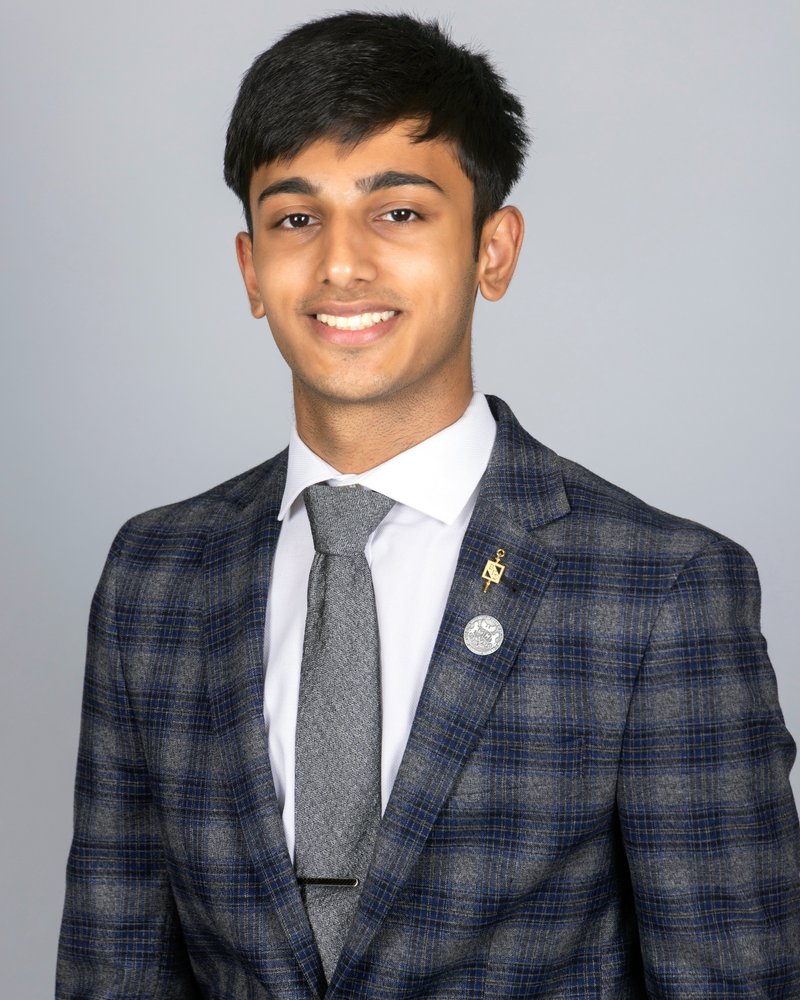
Trying to be the analyst they trust on the third phone call.
B.S. in Information Systems from UT Arlington. 3.83 GPA, eight consecutive Dean's List semesters, Beta Gamma Sigma, Goolsby Leadership Academy Cohort 20. I put these on the resume because they're honest signal.
Currently a Junior BSA at Pharmvista Inc., a contract gummy manufacturer in East Hanover. My day is interviews, requirements, workflow maps, and writing down what the business actually does so the systems team has something to build to.
Outside work: five hundred plus logged options trades over fourteen months. The trading taught me to keep a journal, define the rule before the trade, and sit on my hands most of the time. Turns out that's useful at the analyst desk too.